

For the better part of two decades, the digital marketing world revolved around a single, predictable sun: the Search Engine Results Page (SERP). We spoke the language of keywords, built empires on backlinks, and measured success by the “blue links” we could claim on page one of Google. But as we navigate the landscape of 2026, that sun is setting, making way for a new era of information retrieval. We are no longer just in the age of search; we are in the age of the answer.
This shift has birthed a critical new discipline known as Answer Engine Optimization (AEO). While Search Engine Optimization (SEO) was about helping a user find a path to information, AEO is about being the information itself.
We are currently in the early adoption curve of Answer Engine Optimization. Most brands are still optimizing for rankings, not answers. This creates a strategic window.
Early adopters benefit from:
-
Lower competition for AI citations
-
Higher visibility in conversational interfaces
-
Stronger brand association with expertise
-
Long-term authority compounding
Much like early SEO adopters in the 2000s built dominant digital moats, early AEO adopters in 2026 are positioning themselves as the default expert sources AI systems rely on.
The Evolution from Search to Synthesis in Answer Engine Optimization

To understand Answer Engine Optimization, we must first understand the fundamental shift in user behaviour. In the traditional search model, a user typed a fragmented query like “best running shoes for flat feet.” The search engine would provide a list of websites that might contain the answer. The user then had to click, read, compare, and synthesize that information themselves.
Today, users expect the engine to do the heavy lifting. They ask complex, natural-language questions: “I’m training for a marathon, I have flat feet, and I prefer a wide toe box—what are my three best options under $150?”
An Answer Engine—be it Google’s AI Overviews, Perplexity, ChatGPT, or a specialized vertical AI—doesn’t just point to a website. It reads the web, extracts the relevant data points, and synthesizes a custom response. If your brand’s data isn’t structured to be easily digested by these models, you effectively don’t exist in that conversation.
Search is no longer purely text-based.
AI systems now process:
-
Images
-
Video transcripts
-
Audio content
-
Structured datasets
Brands that want to dominate Answer Engine Optimization should:
-
Add transcripts to all videos
-
Use descriptive alt text for images
-
Structure podcast summaries with key takeaways
-
Publish downloadable data tables where relevant
The future Answer Engine will not just read your blog—it will analyse your entire content ecosystem.
The Core Mechanics of Answer Engine Optimization
Answer Engine Optimization (AEO) is not a replacement for SEO; rather, it is an evolution of it. While SEO provides the foundation of site health and authority, Answer Engine Optimization focuses on the “digestibility” of content for non-human readers—the AI agents.
The first pillar of Answer Engine Optimization is the concept of “Fragmented Authority.” AI models don’t always read an entire 3,000-word whitepaper to find an answer. They scan for specific “nodes” of information. To optimize for this, content must be modular. Each section of a blog post or landing page should be able to stand alone as a definitive answer to a specific question. This means moving away from flowery, introductory prose and toward an “answer-first” writing style. If a subheading poses a question, the immediate following sentence should provide the core fact, with the supporting context following afterward.
The second pillar involves “Entity-Based Content.” Search engines are moving away from matching keywords and toward understanding entities—people, places, things, and the relationships between them. For a digital marketer, this means your content needs to demonstrate a deep understanding of your “knowledge neighbourhood.” If you are an authority on sustainable fashion, your content shouldn’t just mention “organic cotton.” It needs to connect that concept to “water usage,” “fair trade certifications,” “soil health,” and “closed-loop manufacturing.” By building a dense web of related concepts, you signal to an Answer Engine that you are a comprehensive source of truth.
The Role of Structured Data and Schema in Answer Engine Optimization

In the world of Answer Engine Optimization (AEO), metadata is no longer optional; it is the “DNA” of your content. While a human sees a beautifully designed product page, an AI sees a wall of code. Structured data (Schema markup) acts as a translator, telling the AI exactly what it’s looking at.
By using specific Schema types—such as FAQ, How-To, Product, and Review—you are essentially hand-feeding the Answer Engine. You aren’t forcing the AI to “guess” what your price is or how your product works; you are declaring it in a standardized format. In 2026, the brands that dominate AI citations are those that have meticulously mapped their data so that AI agents can crawl and extract it with zero friction.
Why Quality Over Quantity is Non-Negotiable in Answer Engine Optimization
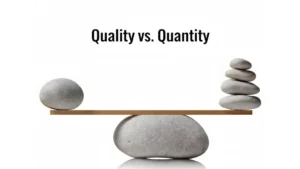
There was a time when “content clusters” and high-volume posting could game the system. In the Answer Engine Optimization (AEO) era, this strategy is not only ineffective but potentially harmful. Answer Engines prioritize experience, expertise, authoritativeness, and trustworthiness.
Because AI models are prone to “hallucinations” (making things up), they are increasingly programmed to prioritize sources that show clear signals of human expertise. This means that first-person narratives, original research, and verified case studies are more valuable than ever. An AI can easily summarize a generic “Top 10” list, but it cannot replicate the unique insights gained from a company’s proprietary data or a founder’s twenty years of field experience. To win at AEO, your brand must offer “Information Gain”—something new that isn’t already in the AI’s training data.
The Shift in Metrics: From Clicks to Citations in Answer Engine Optimization

Perhaps the most challenging aspect of Answer Engine Optimization for digital marketers is the shift in how we measure success. For twenty years, the “Click-Through Rate” (CTR) was king. We wanted people to leave the search engine and land on our site.
However, Answer Engine Optimization often results in “Zero-Click Searches,” where the user gets their answer directly on the interface and never visits the source website. To the traditional marketer, this looks like a failure. To the AEO-savvy marketer, this is a “Brand Impression 2.0.”
In 2026, we measure “Share of Model.” This refers to how often an AI mentions your brand when asked a relevant question. If a user asks an AI for a recommendation and the AI says, “According to experts at [Your Brand]…” you have achieved a level of trust and authority that a mere click cannot buy. This “Citation Equity” builds long-term brand recall. When the user eventually is ready to make a high-stakes purchase, they won’t go back to search; they will go directly to the brand that the AI has been citing as the expert.
Conversational Intelligence: Designing for the Ear

We must also consider the rise of voice and ambient computing. As more users interact with their environments via smart glasses, car interfaces, and home assistants, the “search” becomes a conversation.
Answer Engine Optimization requires a shift in tone. Content needs to be “speakable”. Long, convoluted sentences with multiple clauses are difficult for an AI to read aloud and even harder for a human to process via audio. Optimizing for Answer Engine Optimization means adopting a conversational, yet authoritative, tone. It means anticipating the follow-up questions. If someone asks about fixing a leaky faucet the Answer Engine should be ready with the next logical step: “Do you have the necessary tools, or would you like to see a list of local plumbers?” Marketers who organise these conversational journeys will find themselves fused into the user’s daily life far more efficiently than those stuck in the world of static text.
The Risk of the “AI Echo Chamber” in Answer Engine Optimization

As we lean into Answer Engine Optimization (AEO), we must be wary of the “homogenization” of content. If every brand optimizes its content to be easily summarized by AI, there is a risk that all information will start to sound the same. This creates a “sea of sameness” where brand personality is lost.
The solution is to lean into “Brand Voice” as a technical asset. Your Answer Engine Optimization strategy should ensure that while the facts are easily extractable, the perspective remains uniquely yours. Use strong opinions, unique metaphors, and a distinct brand “persona.” When an AI synthesizes your content, you want it to retain the flavour of your brand’s specific expertise. Don’t just provide the “what”; provide the “why” and the “how we see it.”
Preparing Your Team for the Answer Engine Optimization Pivot

Transitioning to an AEO-first strategy requires a cultural shift within marketing teams. It requires breaking down the silos between SEO, Content Marketing, and Data Engineering.
Content creators need to be trained in “structured writing”—learning how to format articles so they are AI-readable. Data teams need to focus on clean, accessible API feeds and robust Schema implementations. PR teams need to focus on “Digital PR” that earns mentions in authoritative databases and knowledge graphs, not just high-DA backlinks.
The most successful brands in this new landscape will be those that view their website not as a destination, but as a “Data Warehouse” for the world’s AI agents. You are providing the raw materials that the AI uses to construct the user’s reality.
AEO and the Future of Paid Media
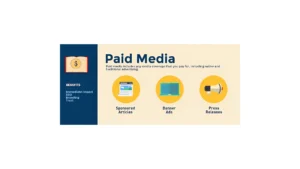
Answer Engine Optimization does not eliminate paid media—it reshapes it.
As AI interfaces reduce traditional ad placements, brands will need to:
-
Invest in authoritative content that earns organic AI citations
-
Use paid campaigns to amplify expert-led content
-
Build remarketing ecosystems around branded search growth
In the future, the strongest performance marketing campaigns may begin not with an ad click—but with an AI recommendation.
Conclusion: Embracing the Transparent Web

Answer Engine Optimization is ultimately about radical transparency and utility. The days of “tricking” a search engine with keyword density are over. The AI is too smart for that. Instead, we are entering an era where the most helpful, most clear, and most authoritative voices will win.
By focusing on Answer Engine Optimization, you aren’t just chasing an algorithm; you are committing to a better user experience. You are making your knowledge more accessible, your data more useful, and your brand more trustworthy. The “blue link” may be fading, but the opportunity to be the definitive answer has never been greater.
As we look toward the rest of 2026 and beyond, the question for your brand is no longer “Where do we rank?” but “How does the world’s intelligence describe us?”
The evolution from SEO to AEO is not a technical tweak—it is a philosophical shift.
SEO optimized for algorithms.
AEO optimizes for intelligence.
It forces brands to ask deeper questions:
-
Is our content genuinely helpful?
-
Is our data structured clearly?
-
Is our expertise visible and defensible?
-
Are we contributing new knowledge?
The brands that answer “yes” to those questions won’t just survive the AI shift—they will define it.
Author : Anand Vazhappara